


Thermal insulation of cold rooms with polyurethane foam
4 000 ₸/кв.м
Минимальная сумма заказа на сайте — 5 000 ₸
- Услуга

Refrigeration units (industrial cold storage chambers) must ensure sufficiently low air temperatures, creating optimal conditions for storing and transporting food products, medicines, and certain types of industrial products. While insulating a household refrigerator is straightforward and can be accomplished using virtually any insulation material, polyurethane foam is most often used when installing industrial-grade equipment.
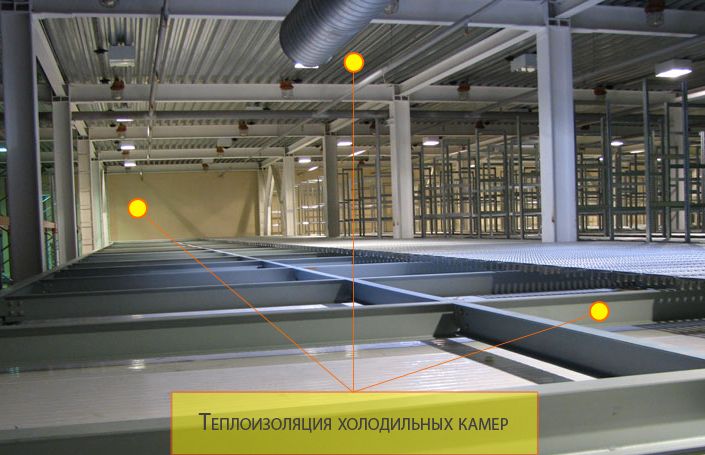
Reasons for Choosing Polyurethane Foam for Cold Storage
Polyurethane foam is chosen as the primary insulation material for mobile cold storage rooms and large-volume refrigeration units due to its physical properties and performance characteristics.
- The low specific gravity of polyurethane foam-based insulation allows refrigeration units to be mounted on standard trucks; this insulation does not create additional load on the vehicle chassis.
- The excellent adhesion of polyurethane foam allows it to be applied to virtually any surface. to any original surface. The resulting coating is highly resistant to vibration loads caused by the operation of the unit that circulates the refrigerant.
- Insulation using polyurethane foam can be performed both in the factory and directly at the cold storage location. This is why thermal insulation of industrial units in logistics and retail centers is achieved using spray polyurethane foam. The small size of the unit allows for work to be performed both outside and inside the industrial refrigerator.
- Two-component polyurethane foam can be applied in multiple layers without compromising the integrity of the coating. This allows for the required thermal insulation thickness (determined by calculating the thermal performance characteristics and the required operating mode of the refrigerator). Furthermore, spray application is seamless, significantly reducing heat loss.
- The minimal moisture absorption and vapor permeability of polyurethane foam allows for the creation of the optimal microclimate in the cold storage chamber for storing various products. This significantly reduces the likelihood of condensation on the unit's surfaces.
The ability to apply polyurethane foam mechanically and the minimal thickness of the required coating reduces the cost of manufacturing refrigeration equipment. This makes the price of a refrigeration chamber with polyurethane foam insulation significantly lower than other similar units in this class.
Advantages of a refrigerator with polyurethane foam insulation
First and foremost, it should be noted that polyurethane foam is completely harmless to the human body. Furthermore, the refrigerator's design does not allow for direct contact between the material and the products stored inside the unit. The use of polyurethane foam offers a number of other operational advantages over other insulation materials.
- Polyurethane foam insulation is not attractive to rodents, ensuring the reliable preservation of the structure.
- The thermal performance of the unit does not deteriorate over time. Unlike rolled mineral wool or slabs, polyurethane foam does not slide off vertical surfaces. The average service life of a refrigerator insulated with polyurethane foam exceeds 50 years, while the payback period for a unit with above-average loads ranges from 2 to 5 years, depending on the working volume.
- To improve the energy efficiency of equipment, double-layer polyurethane foam spraying (external and internal) is used. This technique ensures the required thermal performance with minimal reduction in the working volume of the chamber.
- Insulation with polyurethane foam makes it possible to convert virtually any room into a refrigeration unit at minimal cost. The bulk of the cost will be spent on purchasing the refrigeration unit (compressor), while the cost of polyurethane foam application (even taking into account the price of the material) is significantly lower.


- Цена: 4 000 ₸/кв.м