


FACADE INSULATION
4 000 ₸/кв.м
Минимальная сумма заказа на сайте — 5 000 ₸
- Услуга

FACADE INSULATION
In our climate, insulating a house's facade is a mandatory stage of construction. This type of work not only reduces heat loss but also protects the wall structures from the effects of precipitation. One of the most promising methods is façade insulation with polyurethane foam, which has unique physical properties and performance characteristics.
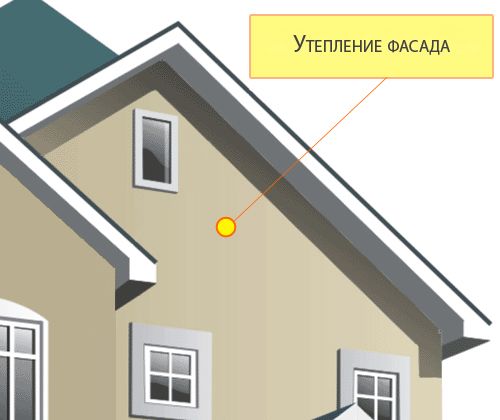
Facade Insulation with Polyurethane Foam
In modern construction, façade finishing and insulation can be carried out using two technologies, and in both cases, the use of polyurethane foam allows for a significant reduction in heat loss.
- Facade insulation using the "wet technology" method involves subsequent sealing of the thermal insulation with plaster mixtures (including decorative plaster).
- The ventilated façade system allows for the use of various finishing materials (siding, including metal, metal profiles, clapboard, blockhouse, and many other decorative coverings installed using frame technology). Insulation with polyurethane foam eliminates the need for vapor barriers and waterproofing coatings, which are otherwise mandatory.
Despite the significant differences between these two exterior home finishing technologies, insulating facades with polyurethane foam-based materials significantly simplifies the thermal insulation installation process, resulting in faster work and lower costs.
Why polyurethane foam?
This choice of insulation for a house facade is justified by the following qualities:
- Low thermal conductivity. In this respect, polyurethane foam successfully competes with all other existing thermal insulation materials. Therefore, a thin layer of polyurethane foam is sufficient for insulating a facade.
- Two-component polyurethane foam, used for thermal insulation installation, has a structure with almost completely closed cells (up to 95%). This resulted in low moisture absorption of the resulting coating, making it possible to insulate the façade without the use of waterproofing films.
- The low vapor permeability coefficient, in turn, provided another opportunity to save on additional materials; a vapor barrier is also not required when installing polyurethane foam insulation.
- Polyurethane foam can be applied to virtually any wall materials and supporting structures required for ventilated façades. Moreover, it has excellent adhesion, so the use of additional fasteners, as is the case with roll or slab insulation, is not required.
- Insulation using this technology is distinguished by significant durability; a coating of this class can reliably protect a home for 50 years or more. It is also worth considering that polyurethane foam does not have the disadvantage of gradually sliding down a vertical surface under its own weight. This thermal insulation is applied as a continuous layer across the entire façade surface.
- Another significant advantage of this type of insulation is that the material is completely unattractive to rodents, unlike traditional foam. While this factor is insignificant for high-rise residents, a country home owner will appreciate this quality.
- The cost of insulating a medium-sized house is comparable to the cost of purchasing other insulation materials and fasteners. However, the coating's effectiveness, durability, and ease of application to any surface make it suitable for use even in industrial construction.
Polyurethane Foam Facade Insulation Technology
- With the wet insulation method, the material is sprayed onto the walls of the house using specialized equipment. Before insulating, the façade must be pre-cleaned to ensure reliable adhesion of the foam to the surface. During the chemical reaction, the foam expands, filling all joints, cracks, and pores. This guarantees the quality of thermal insulation.
Once the required polyurethane foam layer has reached the required strength, the façade is reinforced with fiberglass and can be plastered using standard technology. Ventilated façades are installed using the same technique. - If insulation of an already clad façade is required, a two-component polyurethane foam pouring technology is used. This method is particularly successful for insulating houses with brick cladding. In this case, the material is injected into the voids between the main wall and the cladding through pre-drilled small-diameter holes.


- Цена: 4 000 ₸/кв.м