


ATTIC INSULATION
4 000 ₸/кв.м
Минимальная сумма заказа на сайте — 5 000 ₸
- Услуга

Attic Insulation
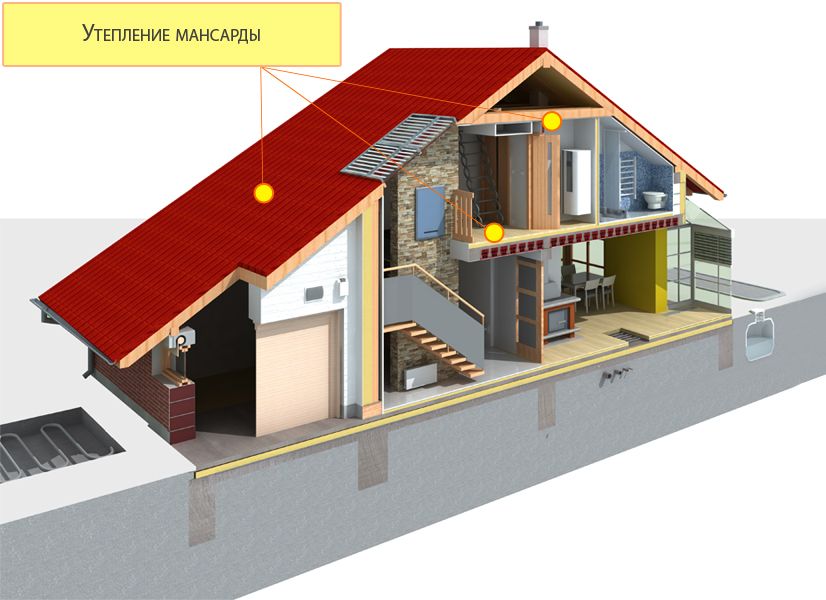
Constructing attic floors and converting attic spaces into habitable rooms is one of the most optimal ways to increase the living space of a building in a metropolitan area. Attics are equally popular with suburban property owners, as they can significantly reduce the building footprint. High-quality internal attic insulation is considered essential for creating a comfortable indoor climate; any deviation from proper insulation installation practices leads to increased heating costs and increased humidity. Leading heating experts believe that insulating attics with polyurethane foam is currently the most effective method.
Why polyurethane foam?
The practicality of using polyurethane foam for attic insulation is determined by its performance characteristics. The following properties of this material play a significant role:
- Minimal thermal conductivity, moisture absorption, and vapor permeability of polyurethane foam insulation.
- The insulation can be applied from the inside of the building as a continuous, seamless layer, eliminating the possibility of cold bridges.
- Insulation with polyurethane foam can be carried out both during the construction of a house with an attic and during its renovation.
- The relatively simple technology for applying polyurethane foam to various surfaces ensures its high adhesion to various materials.
- High work speed (up to 350 square meters per shift), allowing even a large attic to be insulated in just 1-2 days.
- Polyurethane foam is a self-extinguishing material, making it recommended for interior insulation to ensure fire safety.
- Unlike other insulation materials, polyurethane foam does not slide down inclined or vertical surfaces, ensuring reliable thermal insulation of the attic throughout its entire lifespan.
- The price of the material and the cost of the work are quite affordable, and some savings can be achieved due to the minimal thickness of the insulation.
Thanks to all these properties of polyurethane foam, insulating houses with attics with this material is used both in private homes and on an industrial scale.
Methods for installing polyurethane foam insulation
Let's be clear right away: insulating an attic from the outside (during the construction phase) presents many challenges, primarily related to the necessary conditions for high-quality application of the material layer (temperature, humidity, absence of precipitation, etc.). Therefore, in accordance with the recommendations of the manufacturers of this material, insulating the attic from the inside is widely practiced. The technology involves two main methods of applying polyurethane foam coatings:
- It is advisable to insulate an attic under construction by directly spraying the material onto the surfaces to be treated. This will ensure a monolithic coating of all structural elements of the rafter system. Typically, several layers of insulation are applied, with a total thickness of 6-10 cm (this figure is determined by thermal calculations based on climatic conditions in the construction region).
- If it is necessary to insulate an existing building with an attic, it is advisable to use a different technology that allows for the preservation of existing finishing coatings. This technology involves injecting thermal insulation behind the surface of decorative finishes (drywall, paneling, wood panels, etc.). To achieve this, small openings are cut in the finishing materials (working openings, through which foam is applied, and control openings, which allow monitoring the level and quality of filling of the voids behind the decorative paneling).
The same technology is used for insulating and soundproofing frame partitions.
Remember, only professionals should be entrusted with thermal insulation work in attic spaces; any mistake will lead to irreparable consequences.


- Цена: 4 000 ₸/кв.м